Pakistan has been placed on high alert after the National Disaster Management Authority (NDMA) warned that ongoing monsoon rains could trigger flash floods, rising river levels, urban flooding and landslides across several parts of the country until July 24.
The alert comes as water levels continue to rise in major rivers across Punjab, while heavy overnight rainfall has flooded parts of Nowshera, disrupting daily life and prompting authorities to intensify rescue and monitoring efforts.
The NDMA has directed provincial and district administrations to remain on high alert and ensure emergency preparedness in vulnerable areas.
The authority has also advised the public to avoid unnecessary travel to flood-prone and mountainous regions, warning that heavy rainfall could rapidly worsen conditions over the coming days.
Flash flood threat in northern, mountainous regions
According to the NDMA, flash floods are likely in rivers, streams and mountainous rain-fed channels across northern Pakistan.
Flood surges are expected in the Shamshal, Hunza, Chapursan, Kilik, Shigar, Shyok and Hushay rivers in Gilgit-Baltistan.
The authority also warned that water levels may rise in the Jhelum, Neelum, Poonch, Mahl, Betar Nallah, Bhambar Nallah and Kanshi River.
KP districts remain vulnerable
The NDMA warned that flood surges are also likely in the Chitral, Kabul, Swat, Panjkora, Maqam and Kalpani rivers.
Flood alerts have been issued for Khyber, Kurram, Orakzai, Kohat, Bannu, Karak, Hangu, Lakki Marwat and North and South Waziristan.
Additional warnings remain in place for Bajaur, Mohmand, Mansehra, Buner and Swabi, where heavy rainfall may trigger flooding in rivers and seasonal streams.
Punjab, Balochistan face increasing flood risk
The disaster management authority warned that hill torrents in Dera Ghazi Khan, the Potohar region and the Soan River could overflow due to continued rainfall.
Flooding is also expected in rain-fed streams and rivers across northeastern Balochistan.
Authorities have forecast high-level flooding at Marala on the Chenab River and at Mangla on the Jhelum River as water inflows continue to rise.
Water levels to rise in drains and rivers
The NDMA warned that water levels could increase in several major drains, including Dora, Dota, Dwara, Bhimber, Halsi, Ek, Palkho, Bein, Basantar, Dek and Sukhi.
The authority also cautioned that if India releases water from the Ranjit Sagar (Thein), Pong and Bhakra dams, flows in the Ravi and Sutlej rivers may increase significantly, raising the downstream flood risk.
Urban flooding warning
The NDMA has warned of possible flooding in Rawalpindi, Jhelum, Gujranwala, Sargodha, Khushab, Sialkot and Gujrat districts.
Urban flooding is also expected in Lahore, Narowal, Okara, Chakwal and Attock if heavy monsoon rains continue.
District administrations have been instructed to continuously monitor rivers, streams and drainage channels while ensuring the advance deployment of surveillance teams, rescue personnel and relief equipment.
The authority has also directed all relevant departments to implement precautionary measures in flood-sensitive areas to minimize damage.
Apart from flooding, the NDMA has warned of possible landslides in the mountainous regions of Chitral and Gilgit-Baltistan between July 21 and July 23.
Residents and tourists have been urged to avoid unnecessary travel to vulnerable mountainous areas until weather conditions improve.
River levels rise across Punjab
Meanwhile, monsoon rains have increased water levels in several major rivers across Punjab, prompting alerts from both the Flood Forecasting Division and the Provincial Disaster Management Authority (PDMA).
According to the Flood Forecasting Division, low-level flooding has been recorded at multiple locations due to rising river inflows.
Water inflow at Tarbela reached 302,000 cusecs, while Kalabagh recorded 283,000 cusecs, placing both locations in the low-level flood category.
Mangla Dam recorded an inflow of 102,000 cusecs, also reaching the low-level flood threshold. Low-level flooding has also been reported at Head Marala (103,000 cusecs), Khanki (104,000 cusecs) and Qadirabad (109,000 cusecs).
Officials said low-lying areas at six locations along three major rivers have been placed on alert, while river levels are being monitored round the clock.
Most rivers remain within normal limits
Despite localized flooding, the PDMA said water flow across most rivers in Punjab remains within normal limits.
The Indus River is witnessing low-level flooding at Kalabagh, where inflow stands at 269,000 cusecs and outflow at 262,000 cusecs.
On the Chenab River, Khanki is experiencing low-level flooding with an inflow of 113,000 cusecs and an outflow of 106,000 cusecs.
The authority said water flow remains normal at Marala, Qadirabad, Trimmu and Panjnad on the Chenab River.
Normal water levels were also reported at Jassar, Shahdara, Head Sulemanki and Baloki along the Ravi River, while the Sutlej River remains normal at Ganda Singh Wala, Sulemanki and Head Islam.
Similarly, the Indus River continues to flow within normal limits at Tarbela, Chashma and Taunsa, while hill torrents in Dera Ghazi Khan are also currently flowing normally.
Authorities warn river levels may rise further
The PDMA warned that water levels across Punjab's rivers could rise further by July 24 if monsoon rains continue.
Flood warnings have also been issued for seasonal streams and drains linked to the Ravi and Chenab rivers, including Bayan, Basantar, Dek, Ek, Palkhu, Halsi and Dora.
Authorities have also warned of possible flash flooding in the hill torrents of Dera Ghazi Khan.
The PDMA warned that heavy rainfall may trigger urban flooding in Lahore, Gujranwala, Sialkot, Sargodha, Okara, Sahiwal, Bahawalnagar and Rawalpindi divisions.
Officials said district administrations remain in close coordination while continuously monitoring weather conditions and river flows.
Chenab River under close watch
The PDMA has also issued a flood alert for Phalia after increased water flow was recorded in the Chenab River. Officials fear low- to medium-level flooding due to ongoing monsoon rains.
The district administration, irrigation department and rescue agencies have been placed on high alert, while residents living along the Chenab River have been advised to avoid unnecessary movement.
Authorities said preparedness measures have been intensified to deal with any potential flood emergency.
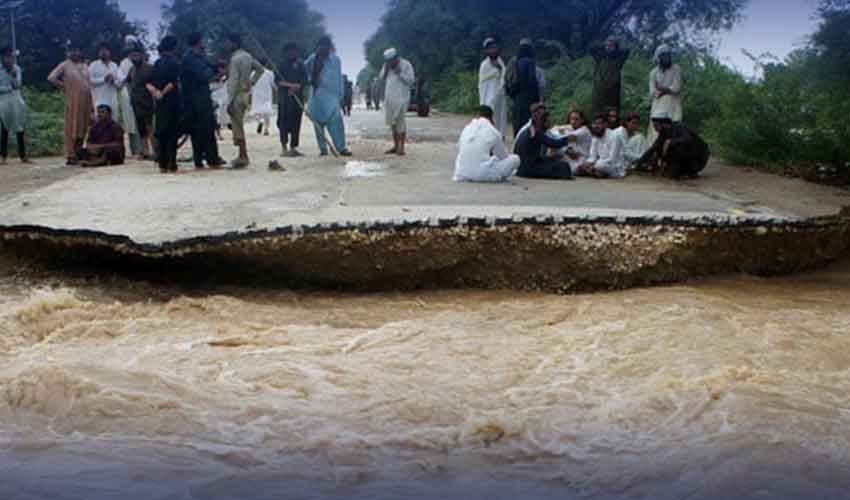
Heavy overnight rainfall has caused severe flooding in Nowshera, where rivers, canals and rainwater drains overflowed. Several feet of water entered homes, markets, mosques, streets and residential areas, creating serious difficulties for residents across multiple tehsils.
Authorities also reported that vehicles and livestock were trapped in floodwaters at several locations, while major rainwater drains across the district continue to experience severe flooding.
Relief camps established in vulnerable areas
PDMA Director General Umar Abbas Mela said flood relief camps have been established in vulnerable and flood-affected areas. The camps have been equipped with basic facilities, medicines and essential supplies to assist affected families if required.
He urged residents living near rivers, streams and flood-prone areas to move to safer places immediately if conditions deteriorate.
Citizens have also been advised to avoid recreational activities near rivers, canals and streams, where water levels can rise suddenly.
Parents have been specifically urged to keep children away from rivers and seasonal streams and never allow them to bathe in floodwaters.
Officials said all concerned departments remain on high alert as monsoon rains continue, with rescue teams closely monitoring river conditions and weather developments across Punjab and Khyber Pakhtunkhwa.
.jpg)


.jpg)