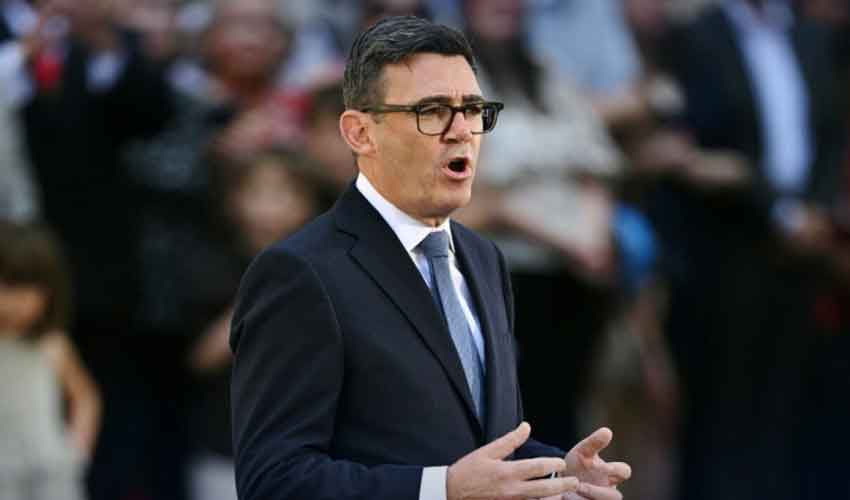
British Prime Minister Andy Burnham has announced his first major cost-of-living measure, unveiling plans to remove value-added tax (VAT) from domestic electricity bills as households continue to grapple with high energy costs.
The tax cut, set to take effect from October 1, will be financed by scrapping the government's controversial digital ID programme.
In one of his first policy decisions after taking office, Prime Minister Andy Burnham said his government will remove VAT from domestic electricity bills starting October 1.
According to Downing Street, the move is aimed at easing pressure on families facing a prolonged cost-of-living crisis and will reduce the average household electricity bill by about £45 a year, based on the current average annual bill of £1,862.
"We're taking immediate action to cut taxes on energy bills, put more money in people's pockets and bring back hope," Burnham said in a statement.
He added that his government wants to give families more "breathing space" after years of economic hardship.
Cut funded by scrapping digital ID programme
Downing Street said the VAT reduction will be funded during the current financial year by cancelling the government's £1.8 billion ($2.42 billion) digital ID programme.
Burnham had announced the cancellation of the scheme shortly after becoming prime minister.
The proposed digital identity programme would have required all employees to hold digital identification documents as part of efforts to tackle illegal migration.
Also Read: New UK PM Burnham vows biggest political reset in 40 years
However, the scheme had been widely criticised and was described as a "fiasco" by a cross-party committee of lawmakers.
Burnham promises to restore confidence
The new prime minister said the policy reflects his commitment to improving living standards and restoring public confidence in government.
"Westminster has not been working for people for too long, with families struggling with the cost of living," Burnham said.
The energy tax cut is intended to demonstrate that his government will act quickly after years of economic stagnation.
Energy prices remain major burden
High energy costs have been one of the biggest drivers of Britain's cost-of-living crisis since wholesale natural gas prices surged following Russia's full-scale invasion of Ukraine in 2022.
The previous Conservative government spent billions of pounds on an energy price guarantee to shield households from soaring bills.
Although prices eased from mid-2023, household energy costs remain up to 60% higher than before the energy crisis.
Recent increases linked to the ongoing Iran conflict have added further pressure on consumers.
The End Fuel Poverty Coalition welcomed the VAT cut as a positive first step. However, the group warned that the measure does not fully address the financial burden facing millions of households.
"It does not address the scale of what households are facing, with millions still left paying an unaffordable share of their income on energy and record levels of energy debt built up over successive winters of high bills," the coalition said.
Questions raised over funding
Despite the announcement, Burnham's funding plan has already come under scrutiny.
Darren Jones, an ally of former Prime Minister Keir Starmer, questioned whether cancelling the digital ID scheme would generate sufficient savings, arguing that the programme itself had not been fully funded.
"The government will have to set out how it will pay for its new policies at the budget," Jones wrote on X.
Burnham aims to move quickly
The new prime minister has pledged to launch an ambitious programme to improve living standards and rebuild trust in the governing Labour Party.
Burnham hopes a more assertive policy agenda will help Labour regain public confidence while countering the growing popularity of Reform UK, led by Brexit campaigner Nigel Farage.
Known as the "King of the North" for his leadership as Mayor of Greater Manchester, Burnham is regarded as one of Labour's most popular political figures.
However, Britain's frequent changes in prime ministers over the past decade have highlighted how quickly political fortunes can shift if governments fail to deliver.
Also Read: Burnham unveils first cabinet after becoming UK prime minister
During his first speech as prime minister on Monday, Burnham said ending rough sleeping would be one of his top priorities. He also said he wanted people to feel the benefits of his government "in their pockets" as quickly as possible.
Among the policies under consideration are caps on bus fares, similar to those introduced during his tenure as Mayor of Greater Manchester.
"It won't solve everything, it won't take all of the pressure off," Burnham told reporters.
"But it just shows the direction of travel and ... about helping them out."
Markets watching govt's fiscal plans
Financial markets are closely monitoring how Burnham intends to finance further spending commitments. His appointment of former Defence Secretary John Healey as finance minister surprised investors.
Government borrowing costs rose on Monday, pushing 30-year gilt yields to a two-month high after Burnham said he intended to use "any flexibility" within existing fiscal rules.
The International Monetary Fund (IMF) had previously praised the former government for avoiding broad, untargeted energy subsidies during the Iran conflict, while the Organisation for Economic Co-operation and Development (OECD) has urged Britain to reduce, rather than expand, VAT exemptions to strengthen tax revenues.
Burnham key cabinet appointments
UK Prime Minister Burnham also unveiled his senior ministerial team.
The appointments include:
-
Finance Minister: John Healey
-
Defence Minister: Wes Streeting
-
Energy Minister: Miatta Fahnbulleh
-
Foreign Minister: Ed Miliband
-
Interior Minister: Shabana Mahmood (re-appointed)
-
Health Minister: Yvette Cooper
-
Business Minister: Jonathan Reynolds
-
Housing Minister: Angela Rayner
The appointments complete Burnham's initial cabinet as he begins implementing his domestic agenda.
.jpg)