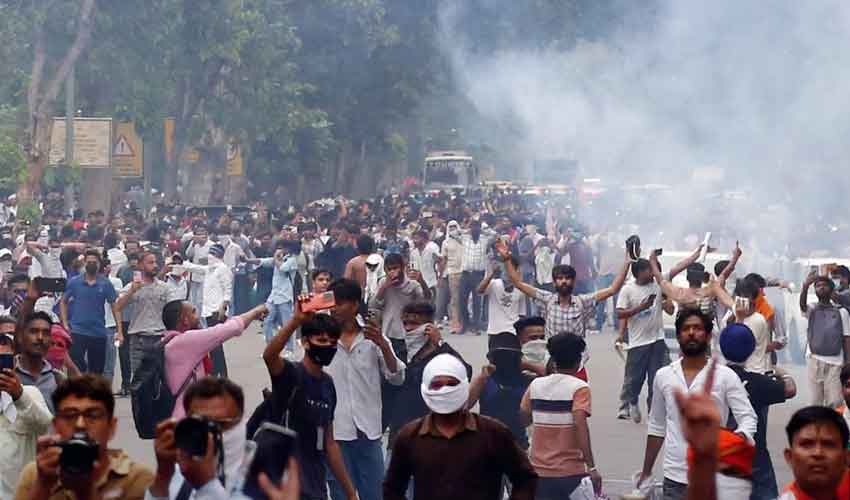
India's youth-led "Cockroach" movement has announced it will continue its nationwide anti-government campaign but will no longer march toward parliament after violent clashes with police left scores of protesters and security personnel injured.
The movement, which began as an online satire, has rapidly evolved into one of the biggest challenges facing Prime Minister Narendra Modi's third-term government.
The self-styled Cockroach Janta Party (CJP) said on Tuesday that it was calling off future marches to parliament following Monday's violent confrontation with police in central Delhi.
CJP founder Abhijeet Dipke said the decision was taken to prevent more young protesters from being injured.
"We will not march again because the police will hurt the youth again," Dipke told a press conference, while apologizing to supporters, especially women, who he alleged were beaten by male police officers during the clashes.
However, he stressed that the anti-government movement itself would continue.
Scores injured during Delhi clashes
According to Delhi Police, nearly 180 people were injured during Monday's confrontation, including 118 police and security personnel and 60 protesters.
The CJP disputed those figures, saying more than 150 protesters were receiving treatment in hospitals. Reuters said it could not independently verify the casualty numbers.
Television footage and eyewitness accounts showed police using batons and tear gas to disperse protesters attempting to march toward parliament.
Police said 70 protesters were detained, adding that legal proceedings would be initiated against them.
Thousands of demonstrators from Delhi and surrounding cities gathered on Monday in an attempt to march to parliament.
The protest marked the largest demonstration yet by the CJP, a movement that began as online political satire but has since attracted millions of predominantly Gen Z supporters frustrated by corruption allegations and growing concerns over India's education system.
Exam paper leak sparked nationwide movement
The movement is demanding the resignation of Education Minister Dharmendra Pradhan over examination paper leaks that affected more than 2 million students during a national medical college entrance examination held in May.
The leaked exam papers forced thousands of students to retake the test.
According to the movement, the scandal exposed deep-rooted corruption in India's education system and contributed to a wave of student suicides.
Local media reported that about a dozen students took their own lives following the controversy.
Among its demands, the CJP is seeking:
-
The resignation of Education Minister Dharmendra Pradhan.
-
The release of activist Sonam Wangchuk.
-
Compensation of 10 million rupees (approximately $104,000) for the family of each student who died by suicide following the examination leak.
Fresh protests continue in Delhi
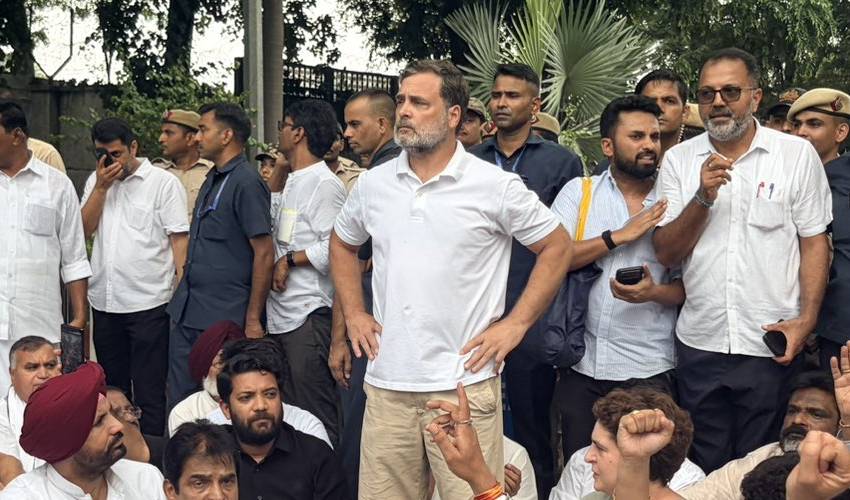
Despite suspending parliament marches, the protests continued on Tuesday. Nearly 500 demonstrators gathered at Jantar Mantar in central Delhi, chanting slogans despite light rain.
Security remained tight across the area, with paramilitary personnel deployed and barricades causing traffic disruptions.
One protester, Sahil Singh from Uttar Pradesh, accused authorities of using excessive force.
"They beat us black and blue and they damaged our protest site," he told Reuters. "We want accountability to be set with Pradhan's resignation."
Police defend their actions
Delhi Police rejected allegations of excessive force.
In a statement, authorities said protesters displayed "unruly, aggressive and violent behaviour" and deliberately violated prohibitory orders despite repeated warnings.
Police maintained that officers acted within the law while attempting to control the situation.
Govt signals willingness to negotiate
The CJP said Health Minister J.P. Nadda had sought time to discuss the protesters' demands after meeting two movement leaders on Monday.
The reported outreach raised hopes that dialogue could help ease tensions.
Parliamentary Affairs Minister Kiren Rijiju also indicated the government preferred negotiations over confrontation.
"I think when the talks are going on in a right direction, the atmosphere should not be vitiated," Rijiju said on Tuesday after Prime Minister Narendra Modi addressed lawmakers from the ruling Bharatiya Janata Party (BJP).
Wangchuk's hunger strike boosts movement
The movement gained further momentum after environmental activist Sonam Wangchuk joined the campaign by launching a hunger strike on June 28.
Wangchuk, 59, had been fasting in solidarity with students demanding accountability over the exam paper leak.
On Saturday, police removed him from the protest site in New Delhi against his wishes and admitted him to a government hospital, saying they were complying with earlier Delhi High Court orders requiring authorities to monitor his health and intervene if necessary.
Court allows hospital transfer
In a fresh development on Tuesday, the Delhi High Court allowed Wangchuk to be transferred from a government hospital to a private medical facility.
The order came after Wangchuk's wife petitioned the court, alleging that her husband was being held in "illegal detention," according to legal news website Bar and Bench.
Political analysts believe the movement reflects wider frustrations among India's younger generation over unemployment, recurring examination paper leaks, and concerns about governance.
Although talks between the government and protest leaders may help calm immediate tensions, experts say the underlying dissatisfaction is unlikely to disappear quickly.
Pearl Pandya, Senior Analyst for Asia Pacific at conflict-monitoring organization ACLED, said any crackdown on what she described as overwhelmingly peaceful protests could intensify public anger.
"This is an issue which affects everyone… any crackdown against the overwhelmingly peaceful protesters, as the government is wont to do, will only serve to fuel anger," she said.
The rapid rise of the Cockroach Janta Party from an online campaign to a nationwide protest movement has emerged as one of the most significant domestic political challenges confronting Prime Minister Narendra Modi's government.
.jpg)