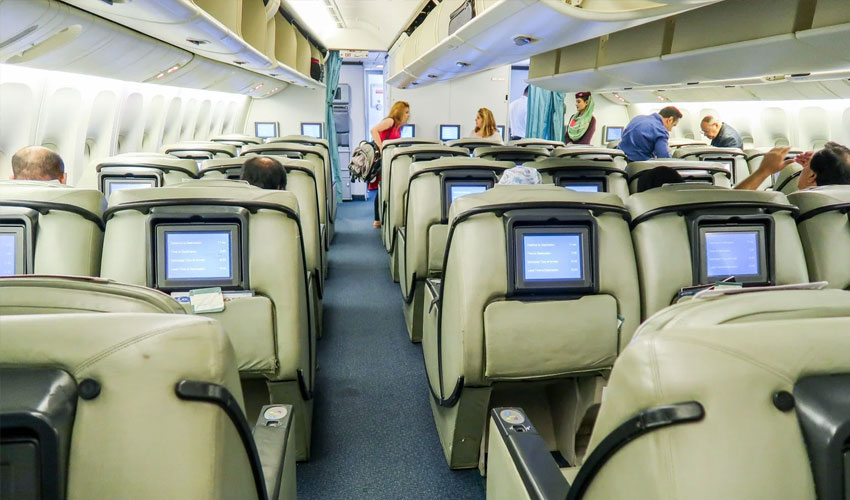
The federal government, in its Budget 2026-27, has announced the abolition of federal excise duty on foreign travel in business class, alongside a series of tax reforms aimed at supporting transport, pharmaceutical production, and industrial growth.
The measures were outlined in the budget speech, marking a significant shift in taxation policy for both consumers and key economic sectors.
Under the new budget, the federal excise duty on business class international travel has been completely abolished, providing relief to frequent flyers and business travelers.
Officials said the decision aims to reduce the cost burden on international travel and improve connectivity for business and trade activities.
Auto sector policy and EV incentives
The government also announced that a new auto sector policy will soon be presented in parliament following cabinet approval.
In the meantime, existing concessional tax regimes for electric vehicles will continue, including:
- Electric motorcycles
- Electric rickshaws
- Electric cars
- Electric buses
Additionally, a 1 percent sales tax facility on imported electric trucks has been proposed.
However, officials clarified that very high-priced luxury electric vehicles will not be eligible for these incentives, ensuring targeted support for mass-market EV adoption.
Tax relief for pharmaceutical sector
In a major health-related relief, the government has decided to abolish taxes on local production of medicines used for cancer and other critical diseases.
The move is expected to reduce production costs and improve affordability of life-saving medicines in the country.
To boost industrial output, the budget also includes the complete abolition of customs duty on more than 100 types of raw materials used in manufacturing.
Officials said the step will help reduce input costs for industries and support export-oriented production.
.jpg)
.jpg)