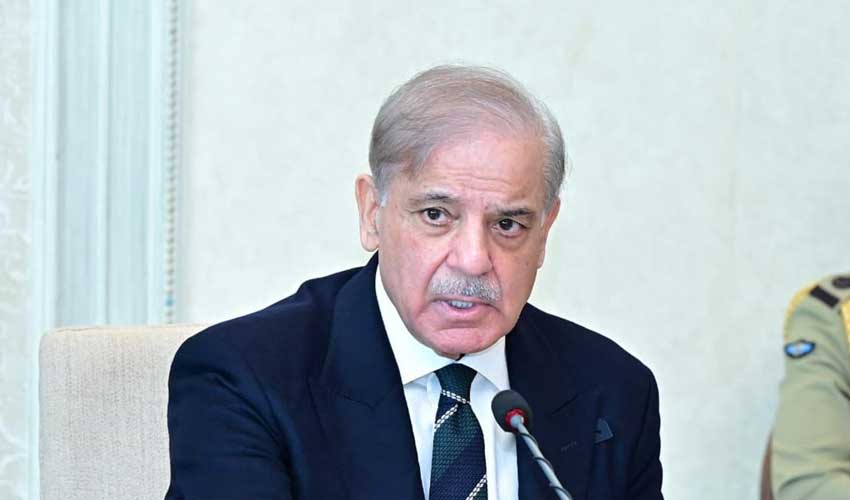
Federal Minister for Planning Ahsan Iqbal has warned that funding for non-priority projects may not be possible within the current development budget, as rising costs and limited fiscal space continue to pressure the federal Public Sector Development Programme.
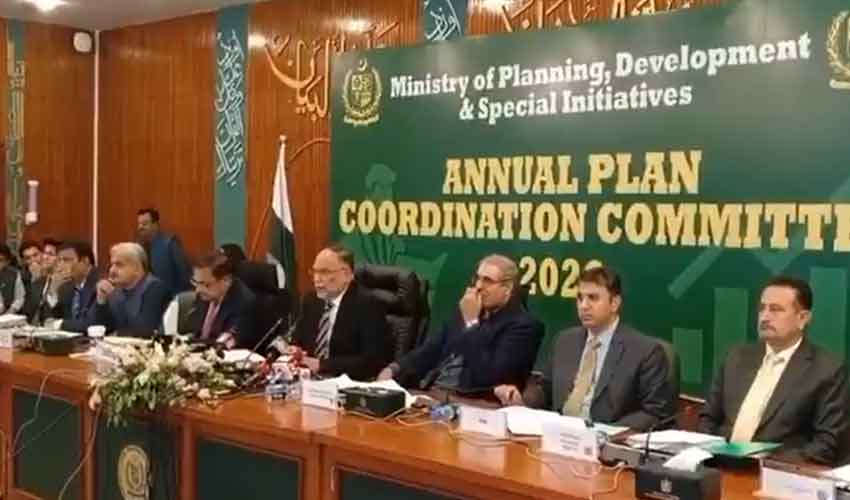
The Annual Plan Coordination Committee meeting for the new budget began in Islamabad under the chairmanship of Planning Minister Ahsan Iqbal.
Representatives of federal ministries and provinces attended the meeting. Khyber Pakhtunkhwa Finance Advisor Muzammil Aslam and Sindh Minister Jam Khan Shoro were also among the participants.
Development budget declined after 2018
Addressing the meeting, Ahsan Iqbal said Pakistan’s development budget continued to progress from 2013 to 2018. He said development work was carried out during that period and the government now plans to implement technology infrastructure projects.
However, he said the development budget declined after 2018 and that decline is still continuing.
Also Read: Pakistan to see more inflation with petroleum surcharge plan
The planning minister said the slow pace of funding for projects has increased their overall cost. He added that if the earlier pace had been maintained, Pakistan would today need more than Rs3,000 billion for development.
According to him, the current development budget does not allow funding for non-important projects.
Federation faces limited financial space
Ahsan Iqbal said the world is spending heavily on technology, but Pakistan lacks the financial space to match that investment. He said provinces have become financially stronger, while the federation does not have enough funds.
He added that after 2018, part of federal resources began going toward interest payments and loan repayment, reducing space for development spending.
The minister said the federal development budget is still around the size it was in 2018. By contrast, he said provincial development budgets have increased by more than Rs3,000 billion.
He said the federation has limited capacity, while provinces have more than Rs3,000 billion available.
Rs3,377bn needed for ongoing projects
Ahsan Iqbal said Rs3,377 billion is currently required for ongoing development projects. He added that the total demand for development projects has reached Rs4,000 billion.
However, the federal government has to allocate only Rs1,126 billion under the PSDP in the federal budget.
Also Read: Federal development budget proposed at Rs1,126bn
The planning minister said around Rs10,000 billion would be required to complete all development projects. He also said work is under way on PC-1s worth Rs5,000 billion.
According to him, Rs720 billion worth of new projects have been proposed, but the government has less financial capacity and does not need new projects at this stage.
PSDP has stagnated for eight years
Ahsan Iqbal said the PSDP has remained stagnant for the last eight years. He said the current fiscal year’s PSDP allocation is estimated at Rs1,126 billion, while statistics show a Rs15 billion deficit in PSDP.
He said increasing resources for development projects has become unavoidable. The minister said Rs180 billion was cut from development project funds last year.
He said due to debt repayment pressures, the PSDP was reduced by Rs2,000 billion. According to him, the PSDP should have been around Rs3,000 billion to Rs3.4 trillion by now.
Also Read: All the steps from budget tabling to approval: Check here
Ahsan Iqbal said there are currently 786 projects in the PSDP. Of these, 197 are major projects. He said 81% of PSDP funds have been allocated for mega projects, while 15% has been set aside for medium-sized projects.
Provinces should fund projects through NFC
The planning minister said money for provincial development projects should be spent from the National Finance Commission award. He said the federal government is focusing on important projects in Balochistan. He added that the completion of development projects remains a priority.
Also Read: Budget 2026-27: IMF asks Pakistan to raise GST to 19%
Ahsan Iqbal said the Ministry of Water Resources has asked for Rs969 billion. He stressed that timely completion of the Diamer-Bhasha Dam is essential. He said the project is important for climate change challenges and water security.
Education, food security, population
The minister said quality higher education for youth is essential for water and food security. He also said 40% of children in Pakistan are physically and mentally weak.
Ahsan Iqbal warned that development is not possible with a population growth rate of 2.55%.
Govt claims inflation has declined
Speaking to the media, Ahsan Iqbal said the government is striving for sustainable economic stability. He said government efforts have significantly reduced inflation.
Bringing inflation from double digits to single digits is an important achievement, he added.
Also Read: Budget 2026-27: IMF asks Pakistan to raise GST to 19%
The planning minister said the government does not want irresponsible growth. He said one temporary method is to open imports, but the previous government took that path and the result is already before the country.
Ahsan Iqbal said Pakistan can take the growth rate to 6% at any time, but the government wants export-based growth.
Export-led growth urged
Ahsan Iqbal said if exports remain low, growth will also remain slow. He said the government does not want the kind of growth seen in 2022, which he said shook the country’s economic foundations.
He added that if Pakistan wants economic independence, it must run an export development plan like the nuclear programme.
The planning minister said Pakistan’s GDP volume has increased from $408 billion to $452 billion. He said GDP growth will be raised from 3.2% to 3.7%.
Industry growth was recorded at 3.5% in the current fiscal year, while foreign exchange reserves currently stand at $21.3 billion.
Gulf tensions and remittances
Ahsan Iqbal said tensions between Gulf countries have affected the whole world. Despite external challenges, he said remittances have remained stable and reached $34 billion.
He again noted that repayment of debts is one of the biggest expenses of the federation and that a large part of the budget is spent only on debt servicing.
.jpg)
.jpg)