Heavy taxes and duties continue to be collected on basic food items and essential commodities, while the government appears hesitant to reduce them in the upcoming budget, according to official documents.
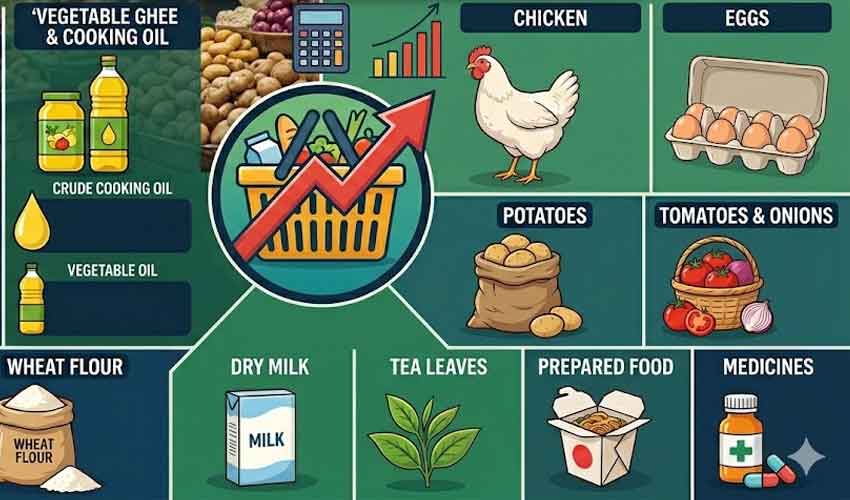
The documents show that several daily-use items, including sugar, cooking oil, tea, dry milk, prepared food, electricity, gas, medicines, chicken, eggs, wheat and rice, remain subject to customs duties, sales tax, additional customs duty or regulatory duty.
According to the document, white crystalline sugar is subject to 20% customs duty and 4% additional customs duty.
An 18% sales tax is also being collected on vegetable ghee, cooking oil, tea leaves and sugar.
The same 18% sales tax also applies to dry milk, prepared food, electricity and gas.
Sales tax on medicines
The document reveals that a 1% sales tax is being collected on various types of medicines. This means that even health-related essential items remain within the tax net despite growing pressure on household budgets.
According to the government report, chicken is subject to 20% customs duty and 4% additional customs duty. Customs duty ranging from 3% to 16% continues to be collected on eggs.
The report also shows that regulatory duty on eggs is charged separately in addition to customs duty.
Duties on vegetables, wheat and rice
Potatoes are subject to 20% regulatory duty, while tomatoes and onions carry 5% customs duty each. A 10% customs duty is being collected on wheat and rice.
Wheat flour is subject to 5% customs duty, according to the document.
Crude soybean oil is subject to customs duty of Rs10,500 per metric ton. The document also shows that 2% additional customs duty is imposed separately on soybeans.
Vegetable oil carries customs duty of Rs10,800 per metric ton along with 10% regulatory duty. Crude cooking oil is subject to customs duty of Rs8,000 per metric ton, while 2% additional customs duty is also charged separately.
Relief in new budget uncertain
Despite the impact of high taxes on food prices and household expenses, the government is reportedly hesitant to reduce these levies in the new budget.
The continuation of duties on essential commodities could keep pressure on consumers already facing rising costs of daily-use items.


.jpg)
.jpg)