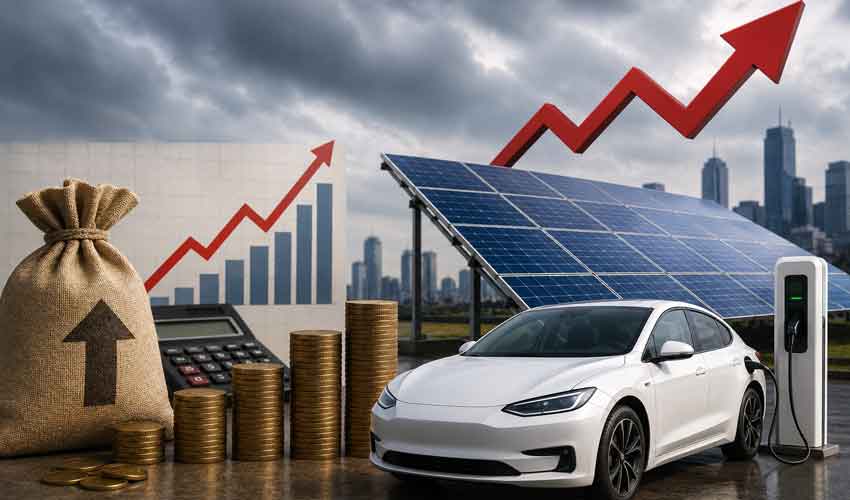
Consumers planning to buy solar panels, electric vehicles or hybrid cars may face higher costs in the upcoming Budget 2026-27, as the government reviews tax proposals amid ongoing negotiations with the International Monetary Fund (IMF).
Sources say the IMF has refused to support new tax exemptions and is instead pushing for significant increases in General Sales Tax (GST) on electric vehicles, hybrid vehicles and solar energy equipment.
IMF proposes major GST increases
According to sources, the IMF has recommended raising GST on electric vehicles from 1% to 18%. The international lender has also proposed increasing the tax rate on hybrid vehicles from 8% to 18%.
In addition, GST on solar panels could rise from 10% to 18%, a move that may significantly increase costs for consumers shifting toward renewable energy solutions.
EVs, solar systems may become more expensive
If the proposed tax changes are approved, prices of electric and hybrid vehicles are expected to increase substantially. The impact could extend across the entire electric mobility sector, including electric cars, motorcycles, rickshaws, trucks and buses.
Sources also indicate that electric pickups, tractors and double-cabin vehicles may face additional taxation under the new budget proposals.
Also Read: Rs17.1tr budget 2026-27 to be presented on June 5
Industry observers fear that higher taxes could slow the adoption of electric vehicles and alternative energy technologies in Pakistan.
Auto policy faces challenges
The proposed tax measures have emerged even before the government formally unveils its new auto policy.
According to sources, the government had planned to encourage electric vehicle adoption by gradually reducing the average tariff on the auto sector from 10.6% to 6% over the next five years.
Officials were also considering abolishing the 1% advance tax on exports in the upcoming budget.
However, the IMF's demand for an 18% GST on vehicles has complicated those plans and created uncertainty around incentives for the auto sector.
Budget proposals under review
Work on multiple tax proposals for Budget 2026-27 is currently underway as policymakers attempt to balance revenue targets with economic growth objectives.
The IMF's stance against tax exemptions has made budget discussions more challenging, particularly in sectors seeking incentives and relief measures.
As a result, concerns are growing that the new budget could lead to higher prices for solar panels, electric vehicles and hybrid automobiles.
Also Read: Govt considers pension, salary increase in budget
While discussions continue over taxes, Pakistan's textile industry has renewed demands for immediate financial relief. The sector has asked the government to release pending refunds worth Rs327 billion without delay.
Textile exporters have also demanded lower tax rates and reductions in electricity and gas tariffs, arguing that rising production costs are making it increasingly difficult to compete in international markets.
Exporters seek relief amid global competition
Industry representatives say that without meaningful reductions in energy and taxation costs, maintaining export competitiveness will become increasingly challenging.
Sources indicate that some of the proposed measures could provide exporters with relief of up to Rs100 billion.
However, officials familiar with the budget process say the chances of a major relief package for the export sector currently remain limited.
With Budget 2026-27 preparations entering a crucial phase, businesses, consumers and investors are closely monitoring the government's final decisions.
.jpg)
.jpg)