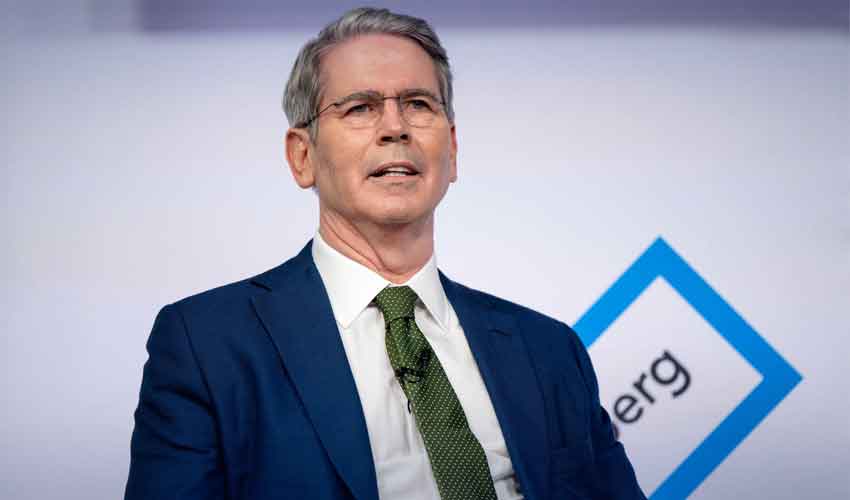
US Treasury Secretary Scott Bessent has suggested that Washington could gradually remove some sanctions on Iran if progress is made in talks with Tehran, but warned that pressure could also increase if no agreement is reached.
Speaking on Friday at the Reagan National Economic Forum in Simi Valley, California, Bessent said the Trump administration was considering three possible approaches: a negotiated deal, continued blockade and economic pressure, or renewed military action.
Asked whether the United States would continue its financial and economic embargo on Iran, Bessent replied, “We’ll see". He said any removal of sanctions or financial restrictions would depend on “milestones” that Iran would need to meet.
“We’ll see ... It will be — anything that’s taken off is taken off slowly,” Bessent said.
The treasury secretary also warned that sanctions could be tightened further if Washington and Tehran fail to reach an agreement.
New sanctions already imposed
Bessent said the United States had already imposed fresh measures against Iran, including action targeting airlines and financial networks. However, he suggested that some restrictions could be lifted if they were aimed at helping ordinary Iranians.
Iran remains under heavy US sanctions after Washington withdrew from a nuclear agreement during Trump’s first term. Tehran has continued to demand sanctions relief as a key part of any new deal.
Trump weighs final decision on Iran truce
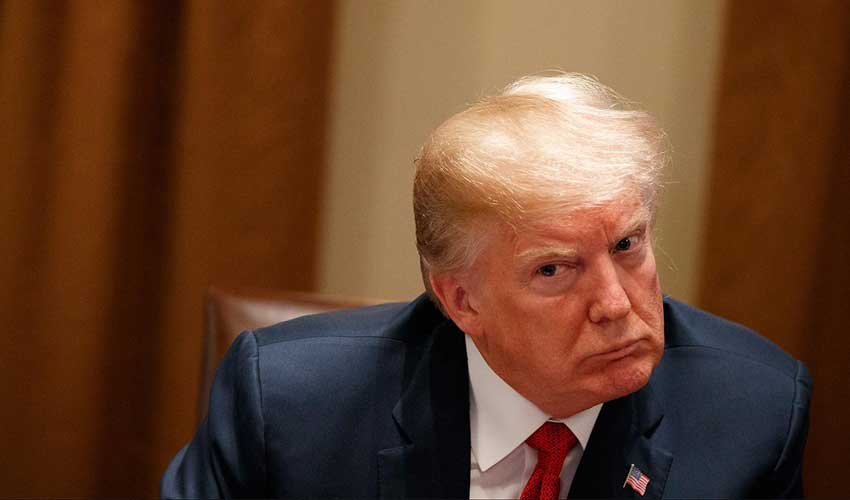
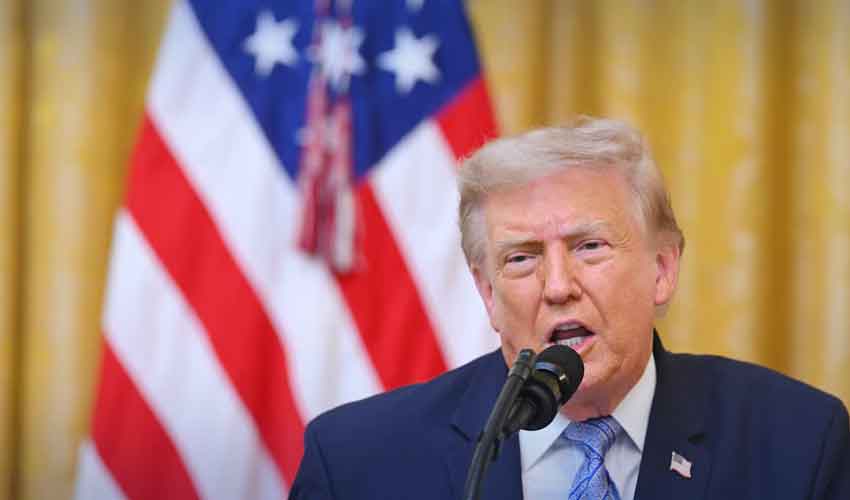
Bessent’s comments came as President Donald Trump said he was making a “final determination” on a possible ceasefire extension with Iran. Trump has also rejected immediate sanctions relief, saying there would be “no money, no nothing.”
Also Read: US ready to restart Iran strikes if talks fail: Hegseth warns
The remarks underline the uncertainty surrounding the administration’s next steps, with diplomacy, pressure and military options all still on the table.
‘Operation Economic Fury’ puts Iran under pressure
Speaking later on FOX Business from the Reagan National Economic Forum, Bessent described the United States’ pressure campaign against Iran as “Operation Economic Fury.”
He said the campaign had pushed the Iranian regime into “crisis” by targeting its financial lifelines.
“I think between five and a half-six weeks of an incredibly successful military campaign and then Operation Economic Fury, where we have really cut them off… they are at the end of their tether now financially,” he said.
Also Read: Trump says will soon decide on Iran deal, demands reopening of Hormuz
Bessent claimed that 40% to 50% of Iranian troops were not being paid, police were not reporting to stations, inflation was probably above 200%, food vouchers were being distributed, and the internet had been turned off.
US says Iranian assets and crypto seized
Bessent said the effort, launched in March 2025, had crippled Tehran’s access to money by seizing Iranian assets, freezing bank accounts and pressuring foreign governments to reduce ties with Iran.
“We have seized about a billion dollars of their crypto,” he told FOX Business. “Just outright grabbed the wallets.”
He also said Washington was working with European allies to seize villas, houses and other properties linked to Iranian funds.
“We are working with our allies all over Europe to grab villas and houses and properties,” Bessent said. “And this is money that’s stolen from the Iranian people.”
Also Read: Iranian sources term Trump remarks on deal as ‘mixture of truth, lies’
According to Bessent, the Iranian regime had been siphoning $400 million to $500 million every month and dividing the profits among dozens of leaders before the Treasury Department intervened.
Talks complicated by Iran’s power structure
Bessent also discussed ongoing negotiations between the United States and Iran, saying internal divisions in Tehran had made talks more difficult. He said President Trump held a White House meeting on Friday and was expected to make a “final determination” on Iran.
“We did not have regime change, but we changed the regime,” Bessent said. “The first level leaders were decapitated, the second level decapitated. So, we’re dealing with the third level.”
He added that negotiators had to convince competing power centres in Iran.
“It’s very tough because, on one side, we have a theocracy with the clerics. On the other side, we have a thug autocracy with the IRGC. And you’ve got to convince both sides,” he said.
Bessent says Iran made major mistake
The treasury secretary said Iran made a “very big” mistake by attacking countries in the Persian Gulf. He argued the strikes made Tehran more vulnerable and made it easier for Washington to tighten economic pressure.
“They made my job so much easier because before, many of our great GCC Gulf allies were a little less than transparent about their banking system, that, ‘Oh no, we don’t have any Iranian oil,’” Bessent said.
He added that after the Iranian strikes, Gulf Cooperation Council states became more open about disclosing ties to Iranian-supplied oil.
Also Read: Naval blockade on Strait of Hormuz shipping to be lifted: Trump
Bessent also praised young US service members enforcing the American naval blockade on Iranian ports in the Strait of Hormuz.
“They’ve done an incredible job,” he told FOX Business. He said conversations with General Caine and Defence Secretary Pete Hegseth showed that US personnel were prepared for the mission.
“They said, ‘Look, these young people aren’t afraid. They want to fight… This is what they signed up for,’” Bessent said.
.jpg)