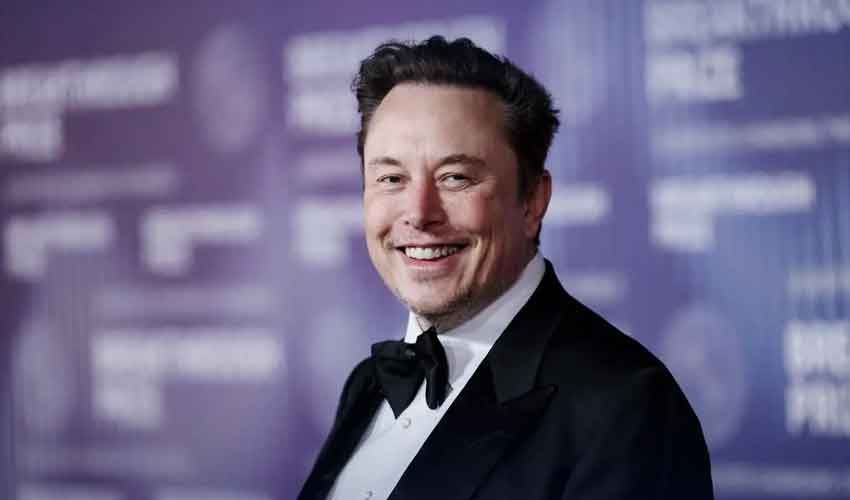
Elon Musk is on track to become the world’s first trillionaire as SpaceX moves toward what could be the biggest initial public offering in history.
The milestone comes as investors enter a new era of commercial space activity, artificial intelligence growth, and unprecedented personal wealth creation.
SpaceX released its initial public offering registration statement on Wednesday, giving investors a detailed look at its revenue, losses, commercial agreements, and ownership structure.
The filing showed that Musk holds 6.4 billion shares of SpaceX.
Although the IPO has not yet taken place, recent private-market trades have priced SpaceX shares as high as $130 each. At that level, Musk’s SpaceX stake is worth about $830 billion.
Tesla, SpaceX push Musk past $1tr
Musk’s Tesla holdings, including vested 2018 stock options, are currently worth about $290 billion. Combined with his SpaceX shares, his total wealth reaches roughly $1.1 trillion, making him the world’s first trillionaire on paper.
The figure is expected to become official once SpaceX completes its IPO.
SpaceX is reportedly targeting a valuation of around $1.75 trillion, though some investors believe the IPO price could go higher.
Analysts suggest an IPO price of at least $160 per share could value the company at about $2.2 trillion.
Australian technology investor Martin Rogers, founder of KTM Ventures, said Musk’s 42% ownership stake in SpaceX could be worth at least $1 trillion if the company lists between $1.75 trillion and $2 trillion.
“He’ll become a trillionaire; that’s for sure,” Rogers said.
“The big way to lose money is to bet against Elon Musk,” he added.
SpaceX’s rise shifts Musk’s wealth away from Tesla
The expected surge in Musk’s fortune highlights a major shift in the source of his wealth from Tesla to SpaceX. This is being driven by investor excitement around commercial space, satellite internet, and artificial intelligence.
Three months ago, SpaceX bought Musk’s three-year-old AI startup xAI for about $350 billion in shares. The deal turned SpaceX from a government space contractor into a major AI player through its ownership of Grok, the chatbot linked to X.
Despite still being unprofitable, SpaceX generated $26 billion in revenue last year. That is slightly more than Westpac Bank, which is valued at less than one-tenth of SpaceX’s expected market capitalization.
Also Read: SpaceX scrubs launch of upgraded Starship, to retry today
The company is also adding to investor excitement by claiming its theoretical maximum revenue could reach $40 trillion if it captured all markets for its services.
US fund manager and early Tesla investor Ron Barron has said SpaceX could eventually be worth between $14 trillion and $42 trillion.
“This is going to become the largest company on the planet,” Barron told CNBC.
Limited share supply could fuel demand
SpaceX is expected to offer only around 5% of its shares to public investors. That limited supply, combined with strong demand, could push the share price higher after listing.
Some observers describe this as a legal form of market manipulation because scarcity may help maximize the company’s valuation.
Musk could become even richer
Musk’s wealth could grow far beyond $1 trillion. His 2025 Tesla incentive package grants him up to 424 million shares, while his SpaceX compensation package covers up to 1.3 billion shares.
If he earns all of that compensation, his Tesla and SpaceX holdings could be worth roughly $6 trillion.
Only the United States and China have annual GDPs above $6 trillion. Germany and Japan are closer to $5 trillion and $4 trillion, respectively.
Musk’s current net worth is already larger than Taiwan’s annual economic output.
Wealth comparison enters historic territory
Musk is not only the world’s richest person but could become the richest private individual in history who did not derive wealth from ruling a nation or empire.
Oil tycoon John D Rockefeller, who died in 1937, is often considered history’s richest capitalist. His wealth is estimated at around $400 billion in today’s terms.
Google co-founder Larry Page, the second-richest living person, is also worth around $400 billion, according to the Bloomberg Billionaires Index.
Musk’s other business holdings, including Tesla, are estimated at about $475 billion.
Musk’s potential rise to trillionaire status is expected to intensify debate over technology, capitalism, and global inequality. Australian venture capitalist Daniel Petre, a former Microsoft executive, said no individual needs extreme levels of wealth.
“Nobody needs $1 billion and I do not think there is any reasonable argument that any human needs this much money,” Petre said.
He warned that people with hundreds of billions of dollars can gain enormous power to influence democracy, especially as societies face political fragmentation, low birth rates, and widening inequality.
Petre called for a 50% tax on billionaires unless they donate a significant portion of their wealth to charity. He said such a tax in Australia could affect around 150 people.
Musk driven by ambition, not money
Musk’s supporters argue that his wealth reflects his appetite for risk, intense work ethic, and commitment to goals such as Mars colonization. Rogers said Musk does not appear to care about money in the same way most people do.
“I don’t think he really cares about money like most people care about money,” Rogers said.
“The people who want Elon’s wealth don’t want to sacrifice for the life he’s had. He’s the guy who literally sleeps on the factory floor.”
Tesla shares rose 59 cents on Thursday, gaining 0.1%, while the S&P 500 rose 0.2%. That small move added about $420 million to Musk’s wealth — a rounding error for him, but generational wealth for most people.
.jpg)
.jpg)