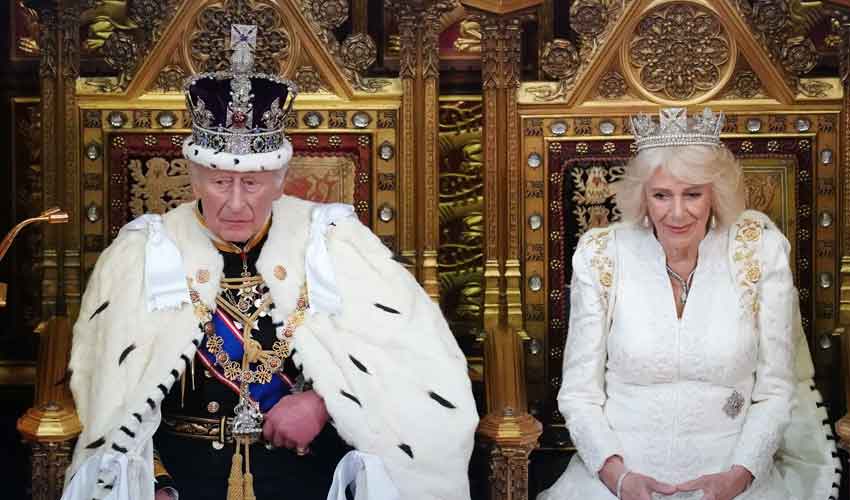
The State Opening of Parliament was formally marked on Wednesday as King Charles III delivered the traditional King’s Speech, setting out the government’s legislative programme under Prime Minister Keir Starmer.
The speech outlined more than 35 proposed bills, covering economic stabilisation, inflation control measures, energy market reforms, NHS improvements, tougher immigration controls, policing and justice reforms, and broader public service restructuring.
However, the ceremonial setting was overshadowed by escalating political instability inside the Labour Party, with growing scrutiny over Starmer’s leadership following a difficult set of local election results.
According to political sources, Health Secretary Wes Streeting held a high-level meeting in Downing Street earlier in the day, fuelling further speculation about internal tensions at the top of government.
Party insiders claim that more than 80 MPs have now expressed concerns over leadership direction, intensifying speculation of a potential challenge in the coming months.
Names circulating as possible alternative leadership figures include Deputy Prime Minister Angela Rayner, Energy Secretary Ed Miliband, and Greater Manchester Mayor Andy Burnham, although none have formally declared any leadership ambitions.
Meanwhile, the Scottish National Party confirmed plans to table a motion of no confidence against the prime minister during upcoming parliamentary debates on the King’s Speech.
Despite the political backdrop, the state ceremony proceeded with full royal tradition, including the arrival of the monarch, the Black Rod summons, and the symbolic closure of the House of Commons doors.
In his address, the King emphasised government priorities including economic stability, stronger border security, accelerated energy transition policies, and reforms aimed at improving public services.
Debate on the King’s Speech is set to begin in both Houses of Parliament from Thursday, but analysts suggest the political narrative is already shifting away from policy detail towards questions over leadership stability within the governing party.