Getting a domicile certificate in Punjab is set to become significantly more expensive after the provincial cabinet approved a 175% increase in the fee.
The government says the higher cost will support a fully digital, paperless system with online applications, mobile payments and courier delivery to citizens’ homes.
The Punjab cabinet has approved an increase in the domicile fee from Rs200 to Rs550, and the notification has also been issued.
With this decision, the cost of obtaining a domicile certificate has risen sharply. In practical terms, citizens who previously paid Rs200 will now have to pay Rs550 under the revised structure.
According to the approved breakdown, the new Rs550 fee includes Rs200 as the core fee, Rs300 for the e-affidavit and Rs50 as a service charge.
The government has also allowed the Punjab Information Technology Board (PITB) to charge Rs50 per domicile as its service fee. Under the arrangement, Rs500 will be deposited in the government treasury, while Rs50 will remain with PITB.
The cabinet has also approved an increase in the e-affidavit fee from Rs100 to Rs300. This revised structure means citizens will now pay the fee, affidavit cost and service charges together to obtain a domicile certificate.
Fee collection by e-Pay Punjab only
The Punjab government has decided that domicile fee will now be collected only through e-Pay Punjab.
This means the process is being shifted entirely toward digital payment. Citizens will no longer follow the older manual route and will instead use the official digital system for paying the required amount.
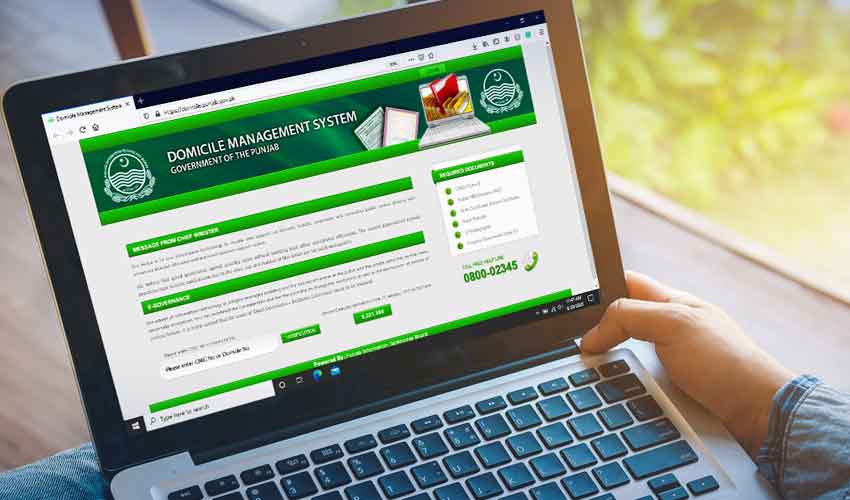
The government has announced that the domicile system will be made completely digital and paperless. The cabinet has also approved running the domicile management system on a permanent basis.
A fully automated domicile management system developed by PITB is being introduced for this purpose. Officials say the model is designed to reduce paperwork and move the entire process onto an integrated online platform.
Citizens to receive domicile at home
Under the new system, citizens will be able to apply for domicile online and receive the certificate while sitting at home.
The domicile will be delivered to citizens’ homes through courier service. The government says this is part of its push to offer convenience in exchange for a more technology-driven public service model.
Application submission and fee payment will also be possible through a mobile app, making the system more accessible for users.
A NADRA-style digital verification and data management system is also being introduced. Under the revised system, domicile certificates are expected to be issued within two to three days, a major reduction in processing time compared to traditional procedures.
Courier, security paper, system costs
The new framework also outlines several operational costs tied to the service. Courier service has been fixed at Rs60 per domicile, while security paper cost has been set at Rs40 per certificate.
Data hosting, SMS alerts and system maintenance have been included at Rs50. According to PITB, the average cost per application is Rs27.55, while the annual expenditure required to run the system is estimated at crores of rupees.
The fee increase has effectively raised the cost of making a domicile from Rs200 to Rs550.
Critics say this has imposed an additional financial burden on citizens in the name of online convenience. In a time of inflation, even a basic certificate has now become more expensive, with the government directly shifting the cost of digital services and facilitation onto the public.
Finance dept questions burden
Even within the government, the revised fee structure has drawn scrutiny. The finance department has raised questions about how much public burden can be justified through such a steep increase in fees.
It has sought a complete breakup of the Rs150 hike in fee and expressed reservations over discrepancies in the fee structure. Officials also pointed to inconsistencies in various paragraphs of the documents.
One objection was that the stamp paper or affidavit fee was written as Rs100 in some places and Rs300 in others. Questions were also raised over the final policy on courier and security charges, with concerns about confusion in the way the charges were presented.

.jpg)