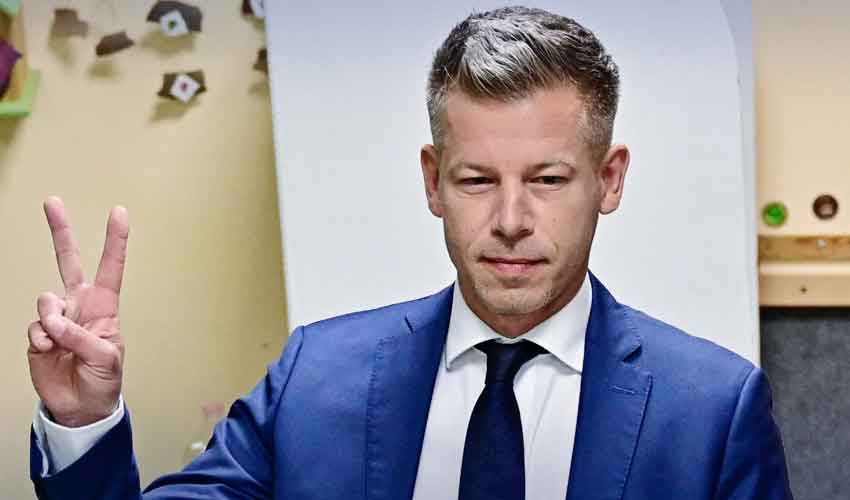
In a historic political upset, Hungary’s long-serving Prime Minister Viktor Orban has lost power after 16 years, as voters backed a pro-European future under challenger Peter Magyar.
Hungary’s nationalist leader Viktor Orban was defeated in Sunday’s national election, marking the end of his 16-year tenure in power.
Preliminary results showed Magyar’s centre-right Tisza party winning around 137–138 seats in the 199-seat parliament — a commanding two-thirds majority that allows sweeping constitutional changes.
Sunday’s election saw record voter turnout, reflecting the high stakes and deep public desire for change. Celebrating along the Danube River in Budapest, Magyar told thousands of cheering supporters: “We have done it. Tisza and Hungary have won this election.”
He added, “Together, we have replaced Orban’s system and liberated Hungary. We have reclaimed our country.”
Campaign framed as ‘East vs West’
Magyar positioned the election as a choice between aligning with Europe or drifting away from it.
He warned that Orban’s confrontational stance toward Brussels risked isolating Hungary, while Orban argued that Tisza could drag the country into war with Russia — an accusation Magyar strongly denied.
Orban concedes defeat
Addressing supporters at Fidesz headquarters, Orban acknowledged the loss, calling the result “painful, but clear.”
“We will keep serving our country and the Hungarian nation from opposition,” he said, as some supporters were seen in tears. Orban’s defeat comes amid growing dissatisfaction over economic stagnation, high inflation, and concerns about corruption.
Hungary experienced the European Union’s worst inflation surge after Russia’s 2022 invasion of Ukraine, with wages remaining among the lowest in the bloc despite rising living costs.
Orban’s legacy: From reformer to ‘illiberal’ leader
A former anti-Communist youth leader, Orban first became prime minister in 1998 at age 35. After returning to power in 2010, he reshaped Hungary’s political system, rewriting the constitution and promoting what he called an “illiberal democracy.”
His tenure saw restrictions on media, NGOs, and judicial independence, leading to clashes with the European Union and the suspension of billions in EU funds.
Orban’s exit is expected to have wide-ranging implications for Hungary’s role in Europe. EU leaders hope the change will ease tensions and unblock a 90 billion euro aid package for Ukraine, which Orban had previously vetoed.
European Commission President Ursula von der Leyen welcomed the outcome, saying, “Hungary has chosen Europe. Europe has always chosen Hungary.”
Ukraine and global reactions
Ukrainian President Volodymyr Zelenskyy congratulated Magyar and expressed hope for stronger cooperation on peace and security.
Analysts believe Hungary may now move closer to the European mainstream, although some issues like migration could remain contentious.
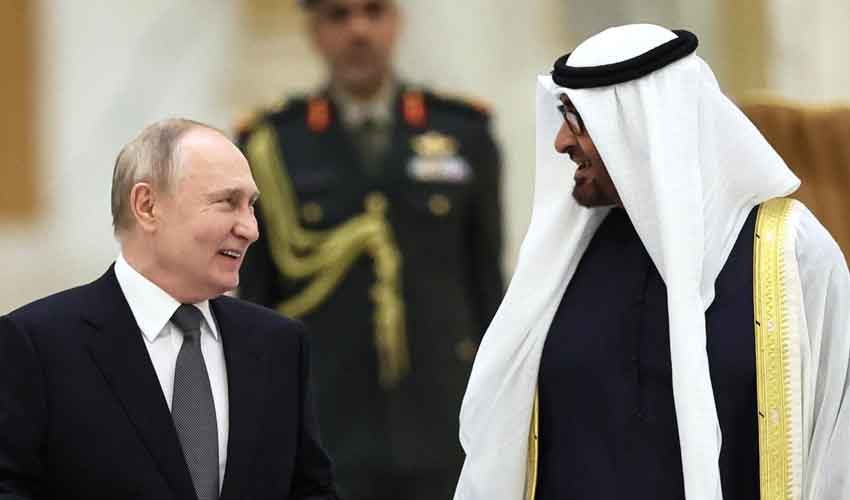
Orban’s defeat is also seen as a setback for his international allies, including Russian President Vladimir Putin and US President Donald Trump. Orban had maintained close ties with Moscow and received backing from Trump and other right-wing leaders across Europe.
Magyar’s rapid rise to power
Peter Magyar’s political journey has been swift and dramatic.
Once a supporter of Orban — even keeping his photo as a child — Magyar rose to prominence after breaking with the ruling Fidesz party and accusing it of corruption and propaganda.
Within months, his newly formed party gained momentum, securing 30% in the 2024 European elections before clinching this decisive national victory.
Reform agenda and future direction
Magyar has pledged to tackle corruption, remove loyalists from key positions, and restore Hungary’s ties with the EU. He aims to reduce dependence on Russian energy by 2035 while maintaining pragmatic relations with Moscow.
His government is also expected to apply to join the European Prosecutor’s Office and unlock frozen EU funds to revive the economy.
For many voters, especially younger generations, the election marks a rare opportunity to reshape the country’s future. “It feels like this is our first and last chance in a long time to actually change the system,” said one young supporter at the victory rally.