Irish actor Michael Patrick, known for his role in Game of Thrones, has passed away at the age of 35 after a prolonged battle with motor neurone disease.
Michael Patrick died on Tuesday, April 7, at the Northern Ireland Hospice, just 10 days after being admitted for care. His wife, Naomi Sheehan, confirmed the news in an emotional Instagram post on Wednesday.
She revealed that Patrick had been diagnosed with motor neurone disease in February 2023 and passed away peacefully, surrounded by family and friends.
“Words can’t describe how broken-hearted we are,” she wrote, describing his final days under the care of hospice staff.
Life remembered with love, admiration
In her heartfelt tribute, Sheehan described her husband -- fondly known as “Mick” -- as an inspiration to everyone who knew him.
“He lived a life as full as any human can live. Joy, abundance of spirit, infectious laughter,” she wrote, calling him “a titan of a ginger haired man.”
She also thanked everyone who supported them during his illness and shared one of Patrick’s favorite quotes by Brendan Behan:
“The most important things to do in the world are to get something to eat, something to drink and somebody to love you.”
Patrick’s longtime writing partner, Oisín Kearney, also paid tribute, calling him “an actor of epic proportions.”
“He was able to make an audience laugh or cry in an instant,” Kearney said, praising his ability to balance comedy and tragedy in his work.
He also highlighted Patrick’s bravery in facing his illness, saying he showed others how to better understand and support people with disabilities.
Career highlights
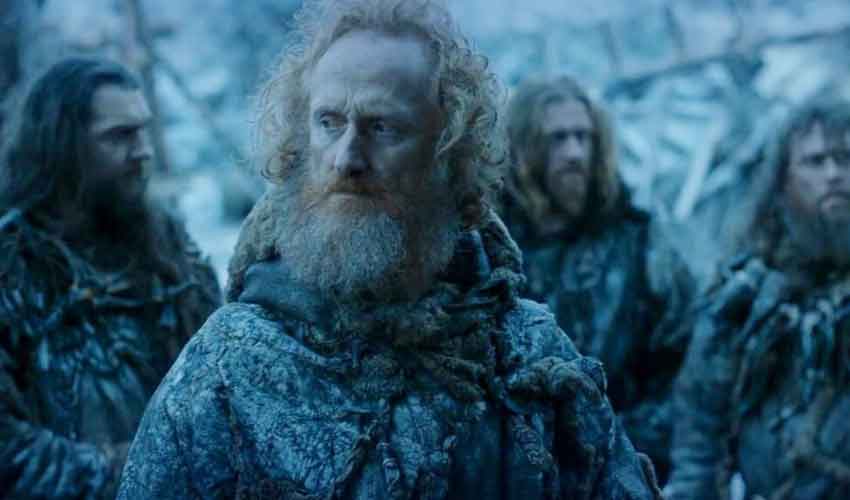
Michael Patrick appeared in 'Game of Thrones' as a Wildling Rioter in season six. Beyond that, he featured in several projects, including 'The Keeper', 'The Spectacular', 'Unhinged', and 'This Town'. He was also an accomplished writer, co-creating the BBC series 'My Left Nut', which won three Royal Television Society awards and the Summerhall Lustrum Award.
Understanding motor neurone disease
Motor neurone disease is a group of neurological disorders that gradually destroy motor neurons -- the nerve cells responsible for controlling essential muscle movements such as breathing, swallowing, walking, and speaking.
As the disease progresses, these neurons become damaged, leading to increasing disability and, ultimately, death. There is currently no cure for the condition.



.jpg)